


About OTJ Architects
OTJ Architects is a premier, employee-owned (ESOP) architecture and interior design firm, founded in 1990 and recognized as one of the top 100 design firms in the U.S. With offices in Washington, D.C., New York, San Francisco, San Diego, Boston, Miami, and Chicago, they specialize in creating award-winning, people-focused workplaces, sustainable environments, and, notably, performing arts spaces.
With multiple offices and distributed teams, OTJ relies on standardized workflows and strong internal QA processes to maintain quality across projects.
"ArchiBoost has strengthened how we manage technical risk across projects. It gives our teams clarity earlier - so we’re not catching avoidable issues deeper into the process."


The Challenge: Bottlenecks in Technical Review
Before ArchiBoost AI, OTJ’s review process depended heavily on senior leadership to manually locate code compliance and coordination issues in a sheet-by-sheet QA/QC review.
That approach worked - but it created bottlenecks.
When senior principals spend significant time redlining drawings, it reduces the time available for mentoring teams, shaping design strategy, or managing client relationships. At the same time, interpreting local jurisdictional codes across multiple cities requires constant vigilance and coordination.
As Lucille explains:
“We rely heavily on senior technical leadership for code interpretation. But they can’t be available 24/7. When you’re deep in the design process you need clarity quickly.”
Maintaining consistency across offices - especially during compressed project schedules - required a more scalable solution.

The Solution: A Structured Technical Layer
OTJ implemented ArchiBoost AI as a structured technical layer embedded within workflow. The focus centered on three core areas:
- Code Compliance Agents
- Knowledge Hub for firm standards
- Automated QA/QC review
Rather than replacing architects, the system reinforces how code, coordination, and internal standards are applied across projects.

How OTJ Uses ArchiBoost
Code Compliance During Design & Permitting
OTJ teams use ArchiBoost during active design development and permitting phases to navigate complex code interpretation.
"Our team has found the tool invaluable to locate relevant code constraints that are critical to inform our design process," Lucille says, "The speed and clarity it provides represent a new level of capability for keeping pace with demanding schedules."
With instant, cited responses across jurisdictions such as New York City, Washington, D.C., and Boston, ArchiBoost acts as an early checkpoint before escalation to senior staff.
“It gives us answers when we need them - even at midnight.”
QA/QC Review at Scale
OTJ runs major submission sets through the QA/QC review engine prior to milestone reviews. The system flags coordination inconsistencies, schedule discrepancies, and compliance-related risk areas across sheets.
Brian, Principal at OTJ, notes:
“The amount of time it takes to do this level of review manually is tremendous. ArchiBoost surfaces issues in mass, so the reviewer doesn’t have to find everything from scratch.”
In one instance, the system flagged a standpipe defined as manual in the code summary while a 1000 GPM fire pump was scheduled in the fire protection schedule - a fundamental conflict that would impact electrical load and generator sizing. In another, it identified a wall assembly that was too shallow to physically accommodate the sanitary stack shown within it - a constructability issue that could have surfaced much later in the process.
The tool does not replace professional judgment. Instead, it creates a structured checkpoint that teams evaluate and incorporate into their existing Bluebeam and internal review workflows.
Reinforcing Firm Standards
Beyond code and coordination, OTJ uses ArchiBoost’s Knowledge Hub to reinforce internal procedures and project lessons learned.
Rather than relying solely on institutional memory, staff can query firm standards directly within workflow.
This reduces repetitive questions and supports consistency across distributed teams.
Results: Earlier Clarity, Stronger Consistency
By embedding ArchiBoost across code compliance, coordination review, and internal standards, OTJ introduced a more scalable technical review process without expanding staffing.
As Lucille summarizes:
“It strengthens how we apply code, coordination, and our own standards across projects - reducing rework and late-stage corrections. That consistency frees our architects to focus on the design.”
Instead of reactive redlining at the end of the process, OTJ is moving toward earlier validation - catching issues before they become permit comments, RFIs, or costly revisions.
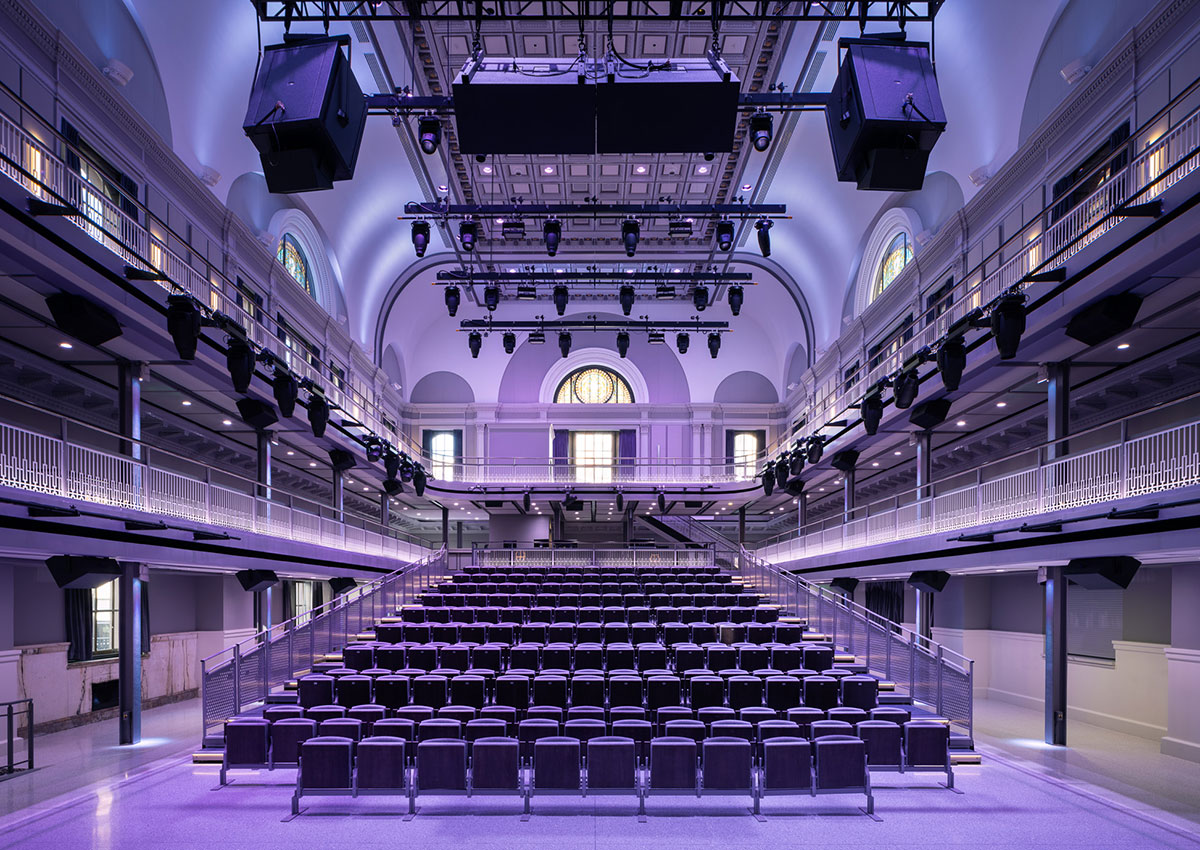
Project images courtesy of OTJ Architects. © OTJ Architects.
Ready to achieve similar results?
Join OTJ Architects and other leaders using ArchiBoost AI.
Book a Demo